Roof verge repairs: dry verge or repointing?
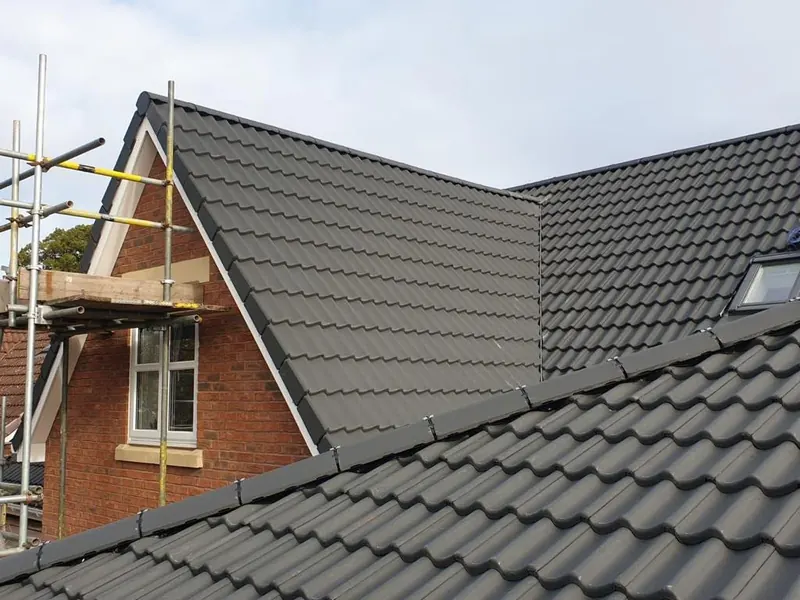
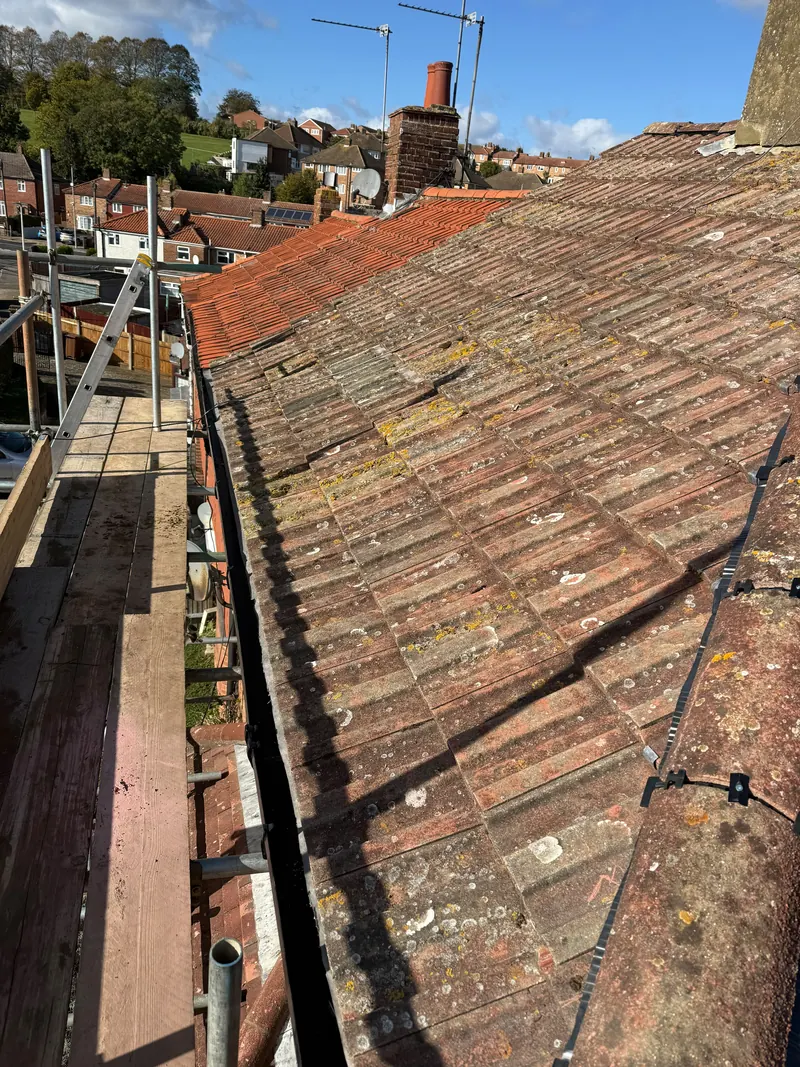
If you only have one or two short runs of cracked verge mortar, repointing is a quick fix and we will tell you so. Where the mortar has gone along the whole gable, or the undercloak has rotted behind it, a dry verge is the better repair because it takes the mortar out of the equation completely.
Dry verge comes in two forms. Individual caps clip over each tile course and lock to the batten end. Continuous verge runs as one profile down the gable and suits modern interlocking tiles. We match the system and the colour to your tiles so the edge of the roof looks finished, not patched.
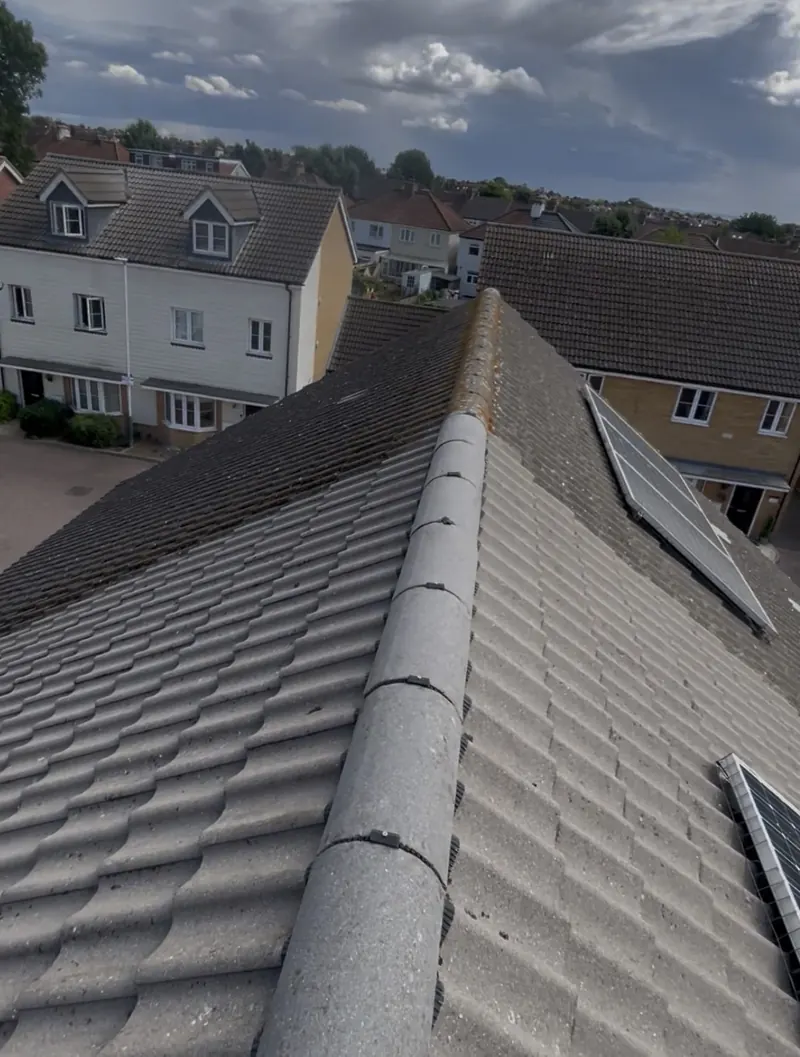
Dry ridge on a re-roof or as a repair
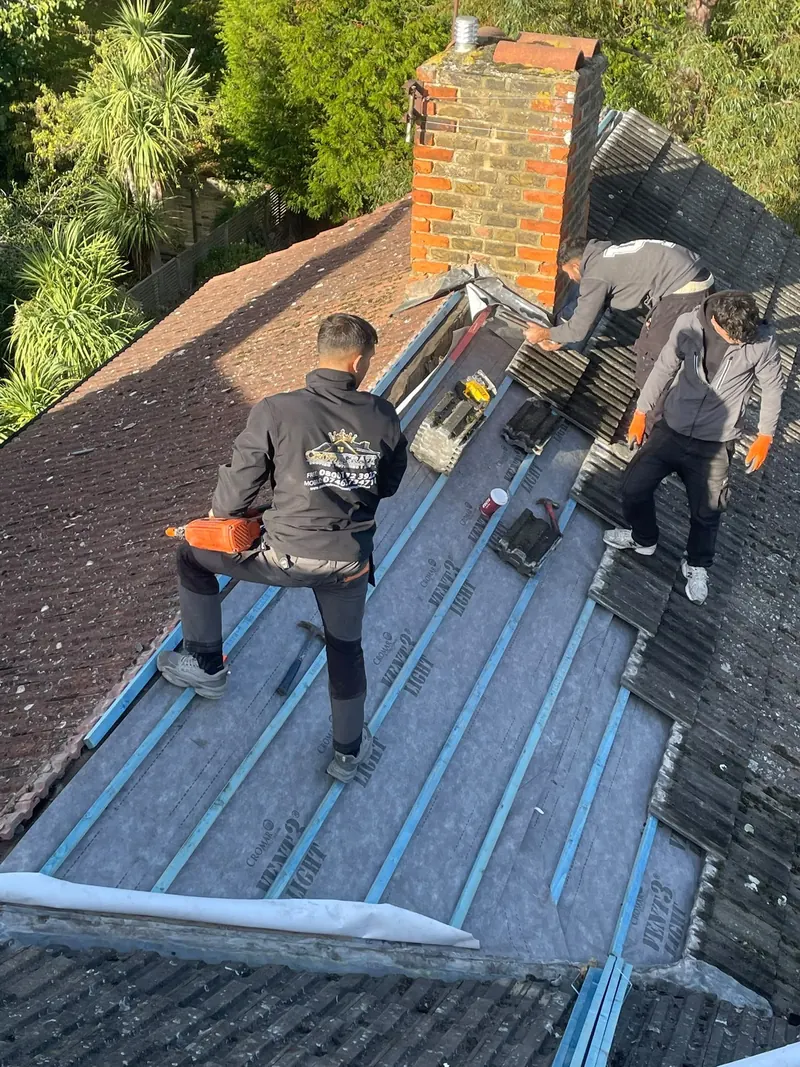
When we re-roof, we strip back to the rafters, fit new breathable membrane and treated battens, and finish with a new dry ridge system where needed. On the Gillingham ME7 re-roof in October the customer's own tiles went back on and the roof was finished with a new dry ridge system, which is what turned a leaking roof into one that will not need ridge work again.
As a stand-alone repair we lift the old ridge tiles, clean the mortar off, fit the ventilated roll and fix each ridge tile back down. Sound ridge tiles are reused. Broken ones are replaced with matching tiles. Muneeb Noman's review below is about exactly this kind of job: a brand-new dry ridge and new ridges fitted by Will, Peter, Josh and Steve.
Why the ventilation matters
A dry ridge roll is not just a fixing. It lets warm, moist air out of the top of the roof, which cuts condensation in the loft. Older Medway houses with breathable membrane added during a re-roof benefit most, because the membrane lets vapour through and the ridge lets it escape.
What affects the cost
The length of the ridge and verges, the height of the house and whether we need scaffold or can work from a tower, the tile profile and whether replacement ridge tiles are needed. Hipped roofs have more ridge to fix than gable-end roofs. You get a fixed written quote before anything starts.