Leaking joints and loose brackets
uPVC gutter joints use seals to hold water inside the channel. Dirt under the seal or movement at a coupling opens a drip point. We clean the joint, check the seal and fit the correct replacement part. Matching the gutter profile gives the connection a proper fit.
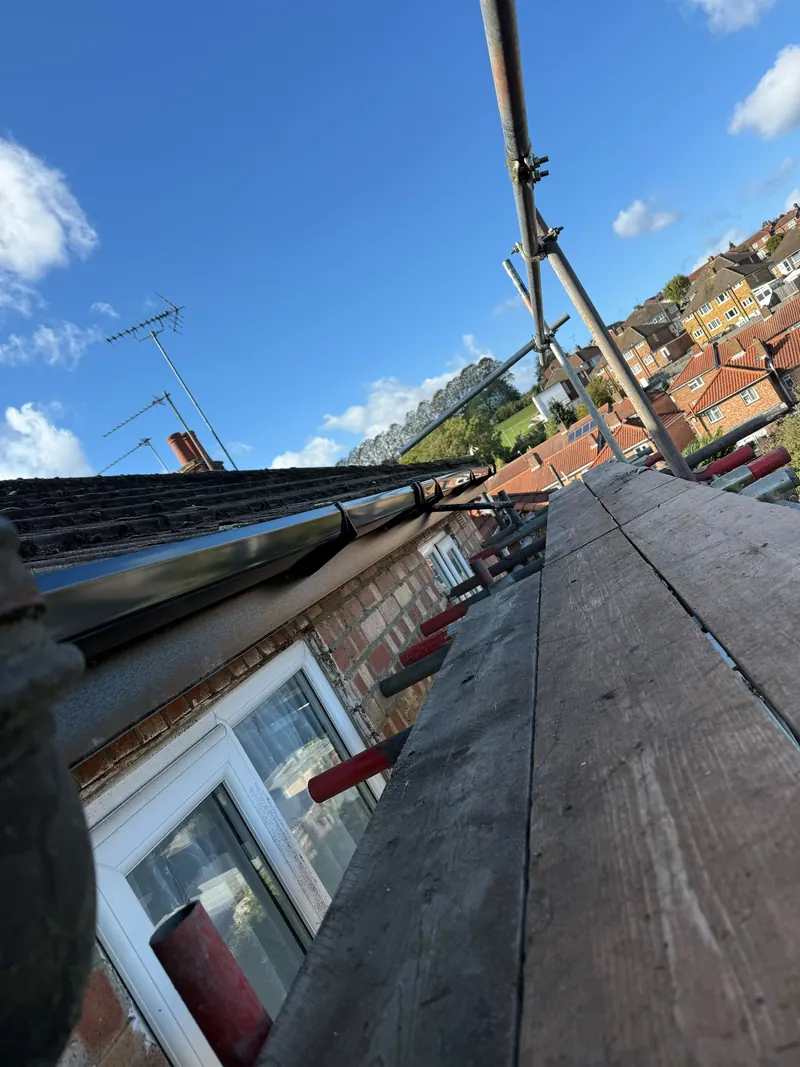
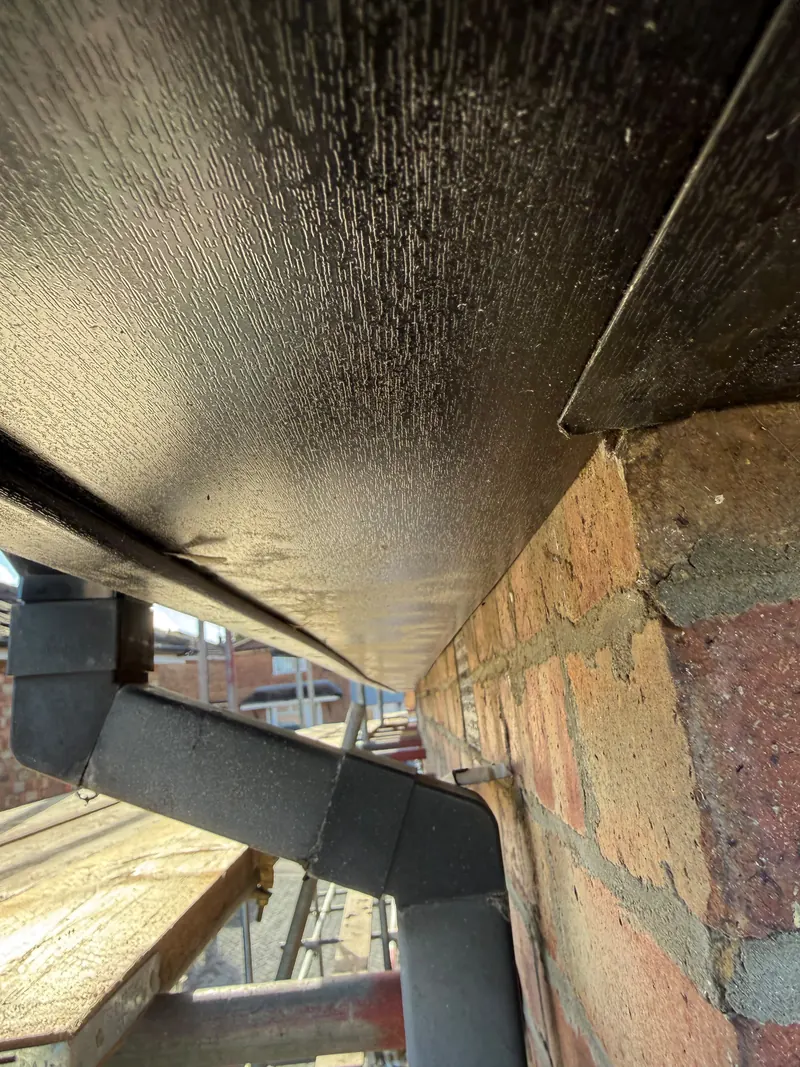
Brackets hold the gutter in line with the roof edge. If they loosen or break, the run sags and water sits between supports. We check the fascia behind them before refixing. A sound bracket needs sound backing, so rotten timber gets addressed before the gutter goes back.
Clearing the outlet and downpipe
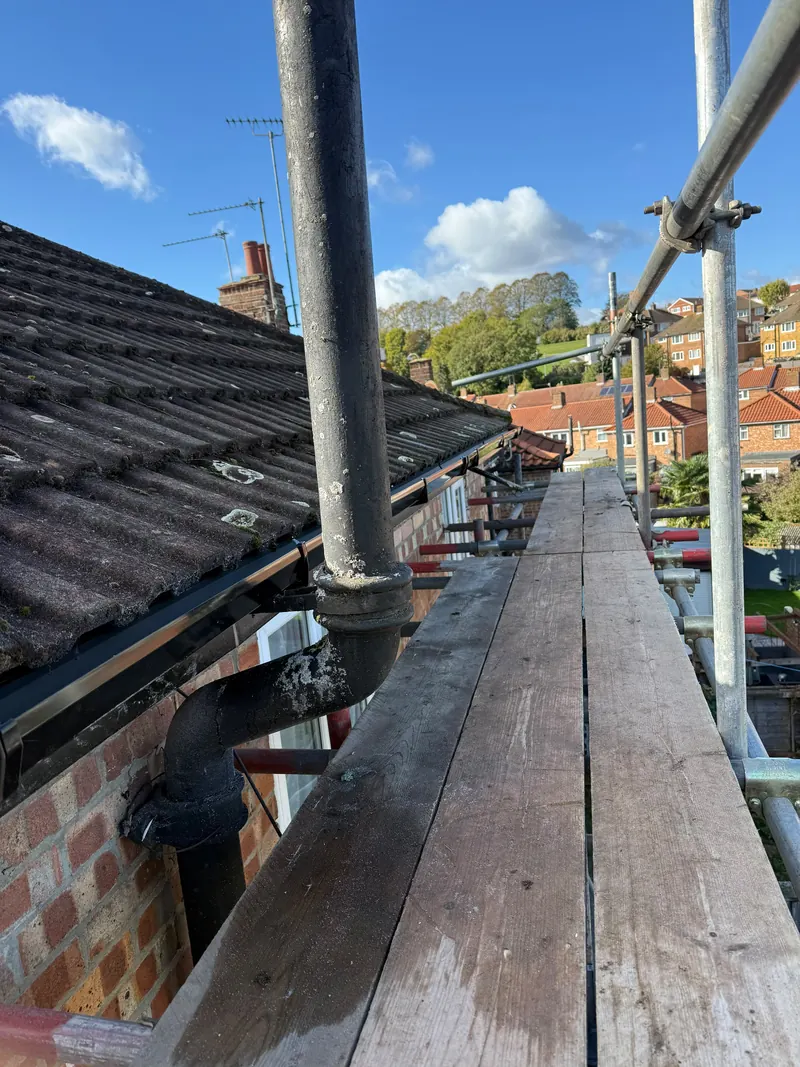
Moss washed off the roof gathers at the outlet, where the channel narrows into the downpipe. We remove that build-up and check the pipe below. Clearing only the visible gutter leaves a hidden blockage in place, with the next rainfall backing up along the same run.
The gutter needs a steady fall towards its outlet. We check for low spots and adjust the brackets to restore drainage. At corners and downpipe bends, we look for trapped debris and leaking connections. That gives water a clear route away from your fascia and brickwork.
When a gutter run needs replacing
A single failed joint on otherwise sound guttering needs a local repair. Brittle sections, repeated cracks or badly distorted lengths need replacement. We match the new run and fittings to the roof edge, with support at joints and outlets so the gutter holds its shape when carrying water.
Access, run length, corners and downpipe positions affect your quote. We also check the roof overhang, because water misses a gutter fitted too far beneath the tiles. Paul Noel's review below describes gutter leaks we repaired and the tidy finish. Theodora P's review covers gutter cleaning alongside a small felt repair.