Sound backing before new boards
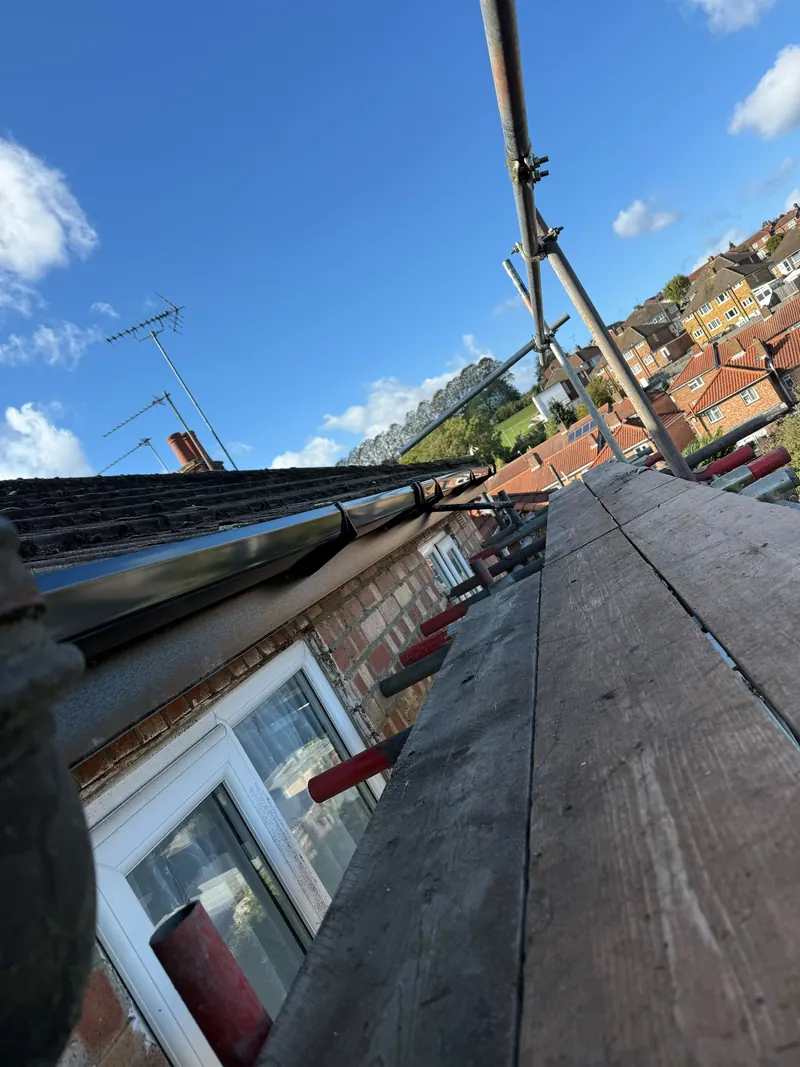
Capping over rotten timber hides the damage without giving the fixings a proper hold. We check the existing fascia and the rafter ends behind it. Failed timber comes out before replacement boards go on. That gives your gutter brackets a stable fixing instead of another screw into a soft edge.
We also check the felt or membrane at the eaves. If it has broken down, water runs behind the gutter and wets the fascia from above. Repairing that drainage edge protects the replacement boards. It stops a fault beneath the tiles from spoiling the new roofline finish.
uPVC boards and the joints between them
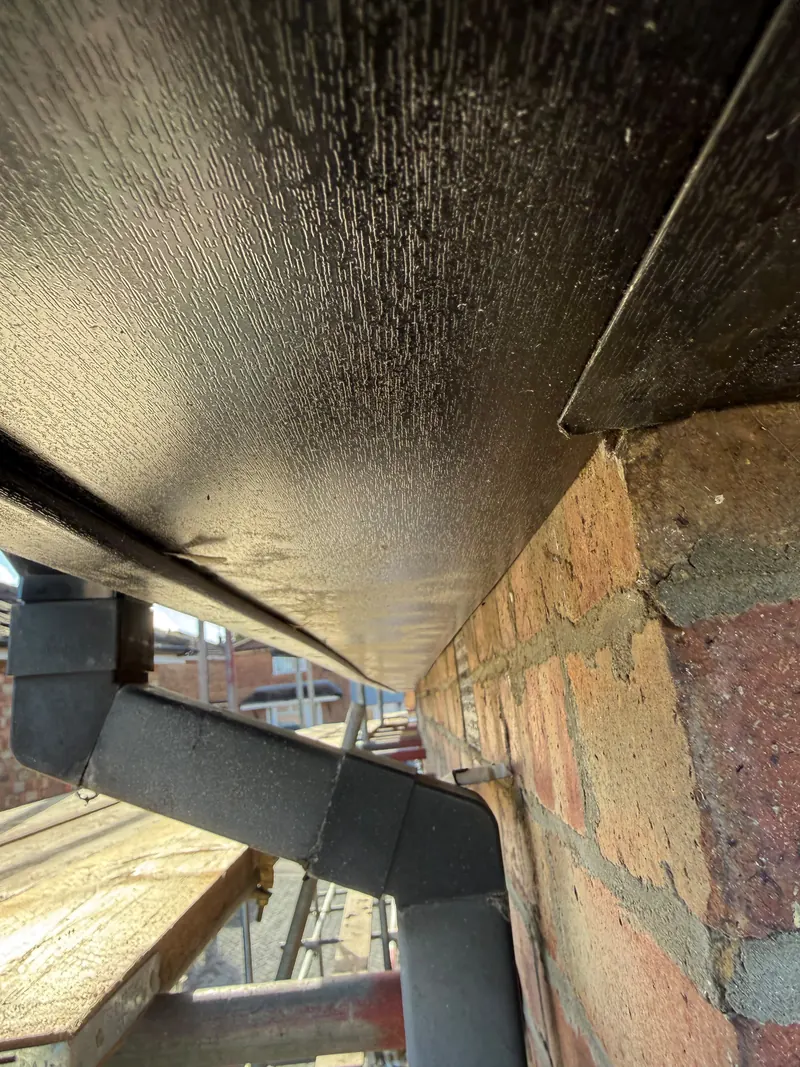
uPVC fascia and soffit boards close the roof edge without the painted surface of timber. We fit the boards to suit the roofline and its backing, with joints and corners properly supported. The finish needs to stay straight along the eaves, particularly where gutter brackets place a load on the fascia.
Long runs need room for the material to expand and contract. We fit the joints to allow that movement and secure the boards to sound supports. At gable ends and changes in height, we close the meeting points neatly so rain and debris do not collect behind loose trim.
Soffit ventilation and gutter alignment
Soffit vents let outside air enter the roof space at the eaves. Blocking that route traps moisture where the roof needs airflow. We check the ventilation while the boards are open and retain the required air path in the replacement, rather than sealing every opening behind a solid panel.
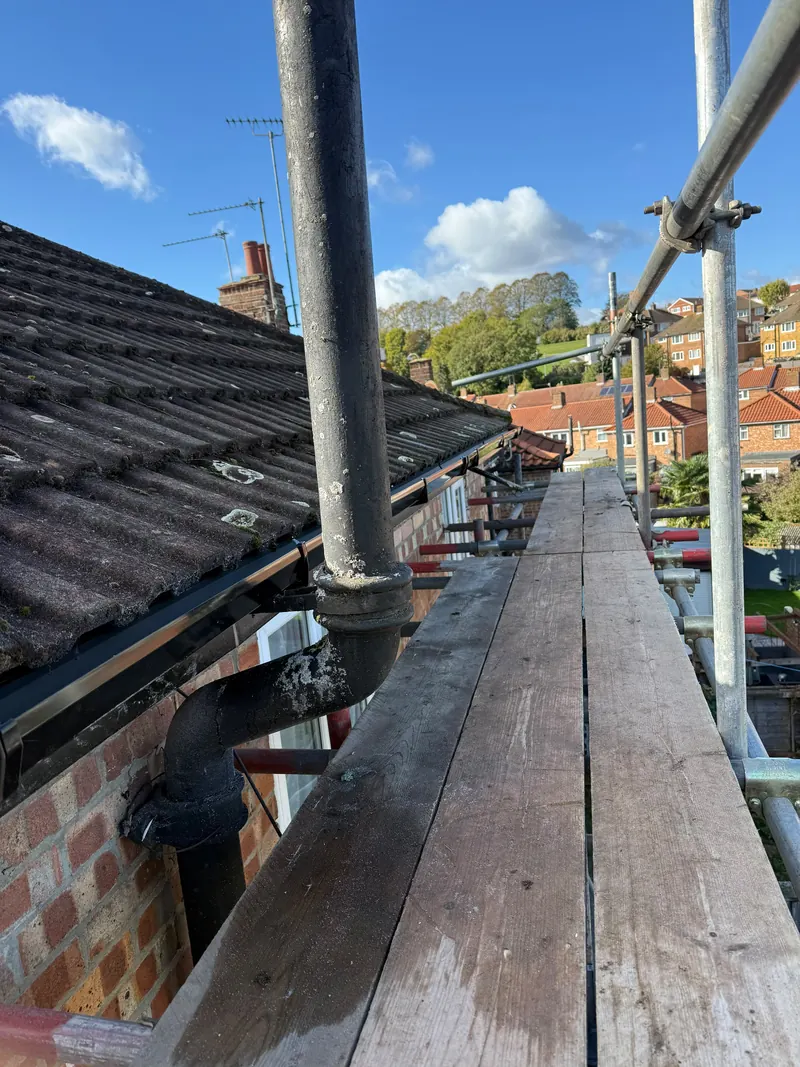
Once the fascia is firm, we refit the gutter to catch water from the tile edge. We check its fall, joints and outlets as part of the finish. Run length, roof height, corners and timber repairs affect your quote. A rear extension beneath the eaves also changes the access needed.