Clay tiles, concrete tiles and slate
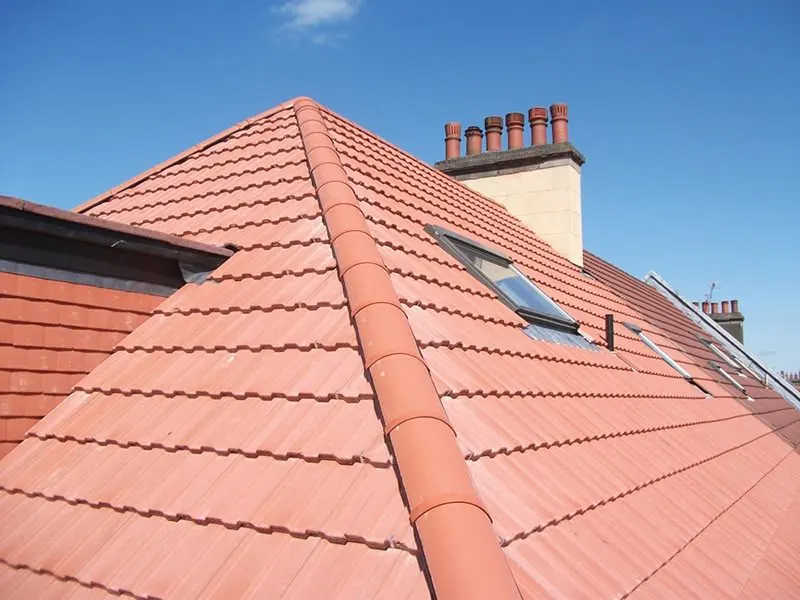
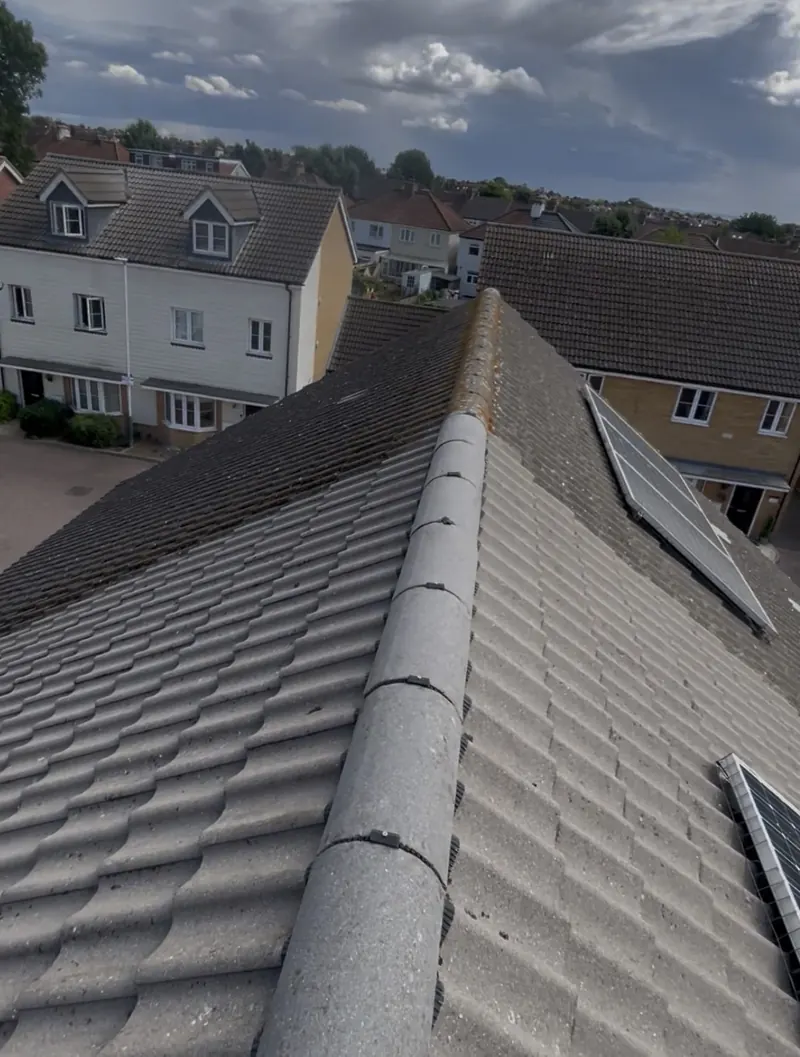
Plain clay tiles rely on overlapping courses to shed water. Interlocking concrete tiles also have side channels that join neighbouring pieces. We keep those channels clear and line up the replacement with the existing course. A tile that looks close but sits badly leaves the repair open to rain.
With slate, the size and overlap work together to protect the joints below. We match the replacement thickness so it sits flat without lifting adjacent slates. Sound slate with failed fixings needs secure refixing. Split or delaminating pieces need replacement, even if their colour still matches the roof.
The layers holding the covering
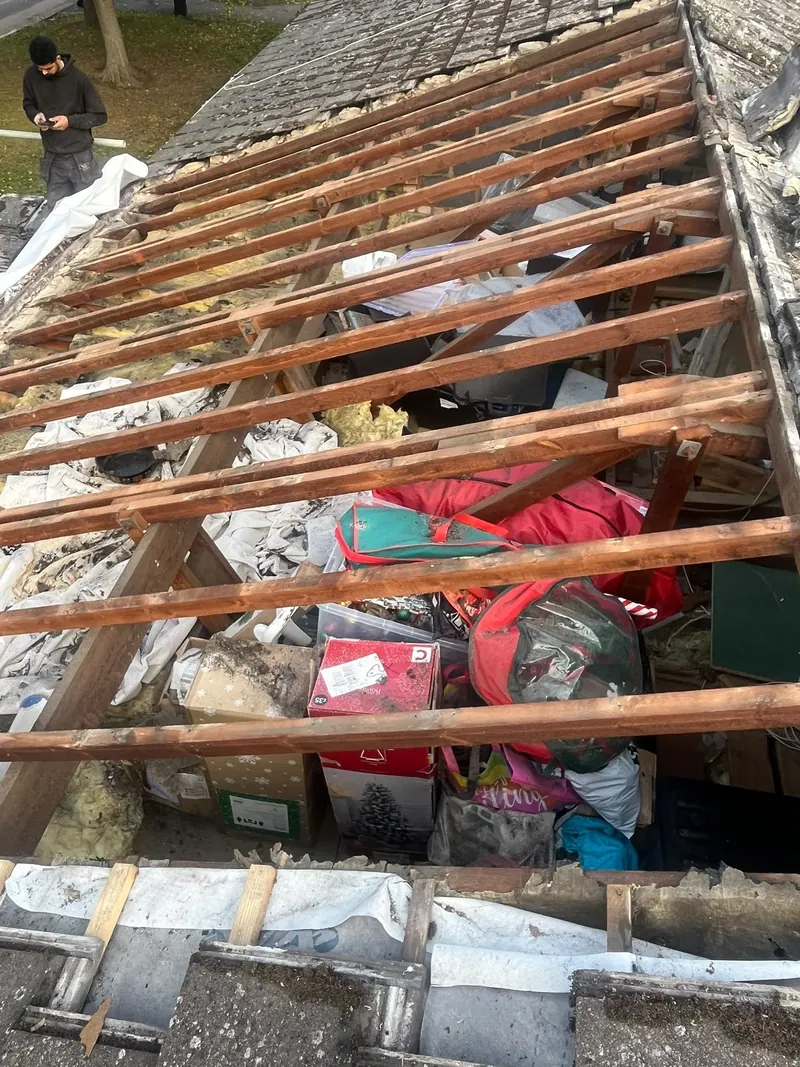
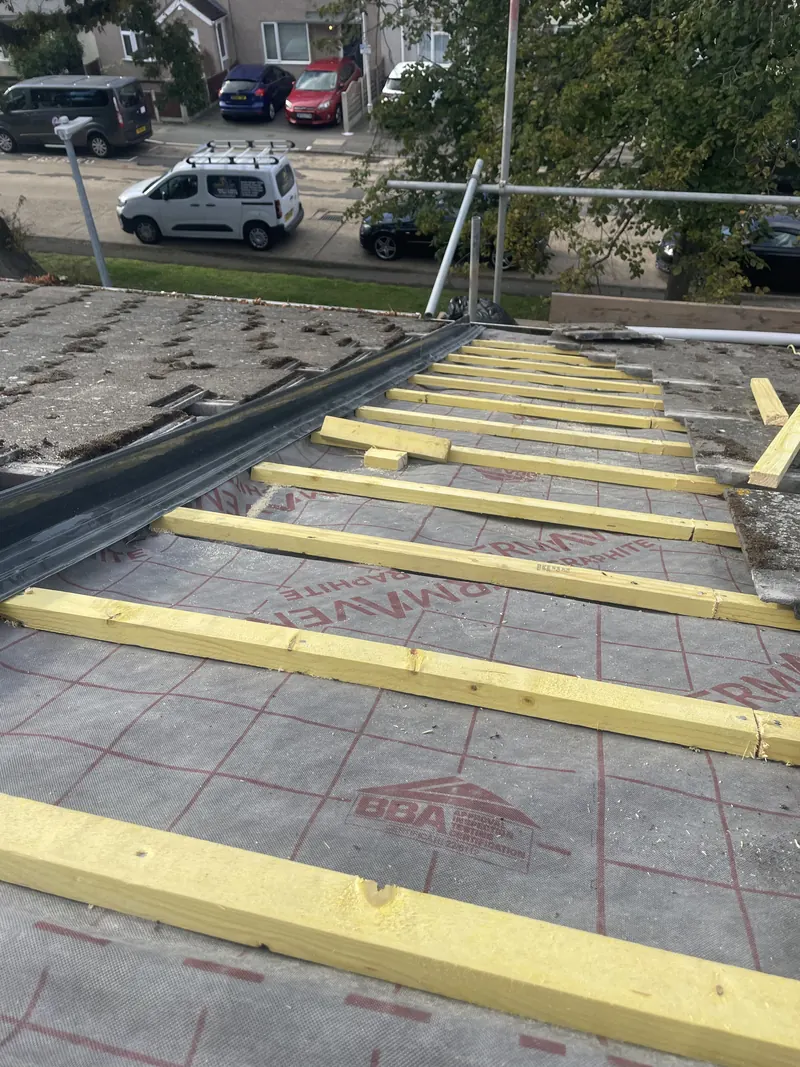
A tile repair starts at the surface, but we check what is carrying it. Rotten battens leave nails with nothing firm to grip. Torn felt lets water through beneath an otherwise neat repair. We renew damaged sections before refitting the tiles or slates, so the work has a sound backing.
On our Basildon SS14 re-roof, the tiles went back over new breathable membrane and treated timber battens. The old felt had failed and the timbers were weak. We stripped back to the rafters and completed the roof in three days. Reusing those tiles kept the existing finish while renewing the layers underneath.
Neat edges that keep water moving
Cut tiles beside a valley need secure fixings and room for water to pass. We check the valley lining and keep the cut edges clear of its drainage channel. At hips and ridges, we check the capping tiles and their fixing, so the meeting points between slopes stay covered.
At a gable, we check the verge and undercloak as well as the end tiles. Crumbling mortar leaves those edges loose. The amount of cutting, roof pitch, access and replacement material affect your quote. We measure the repair and its surrounding details before setting out the work and materials.