Stopping water at the damaged section
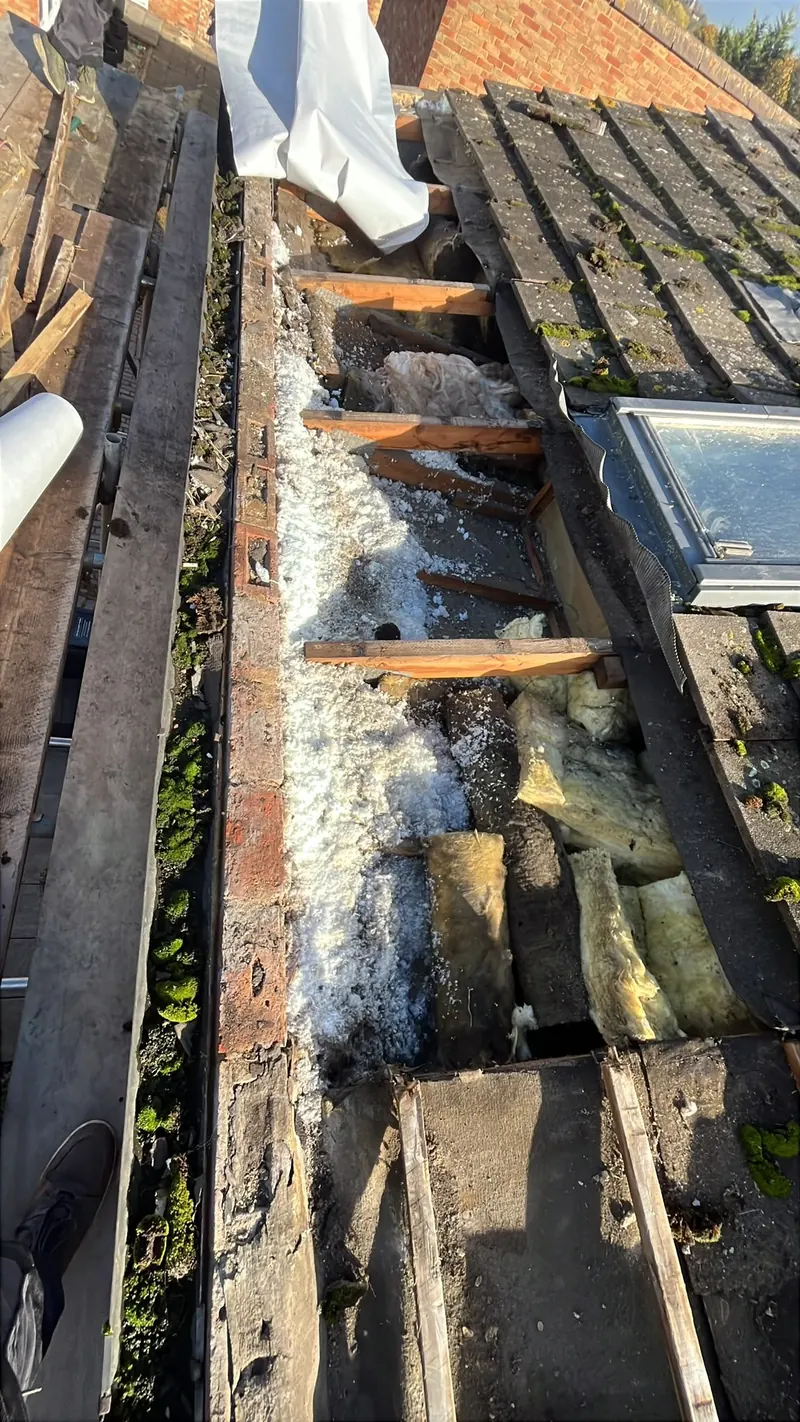
We lift tiles around the fault to check the felt and battens beneath. A replacement tile will not close a hole in the underlay below it. We renew damaged layers and secure the covering, so water sheds down the slope instead of running onto the loft timbers.
At a chimney, we check the lead apron, side flashings and uphill channel. At a valley, we check for debris and damage beneath the water flow. Finding that route matters because the ceiling drip can sit well below the point where rain first entered your roof.
Temporary protection and the full repair
Some damage needs protection before the full repair is ready. We assess the opening and fit temporary weather protection when that is the right first stage. We then set out the permanent work, including any wider underlay damage, replacement covering or access needed to reach the affected slope.
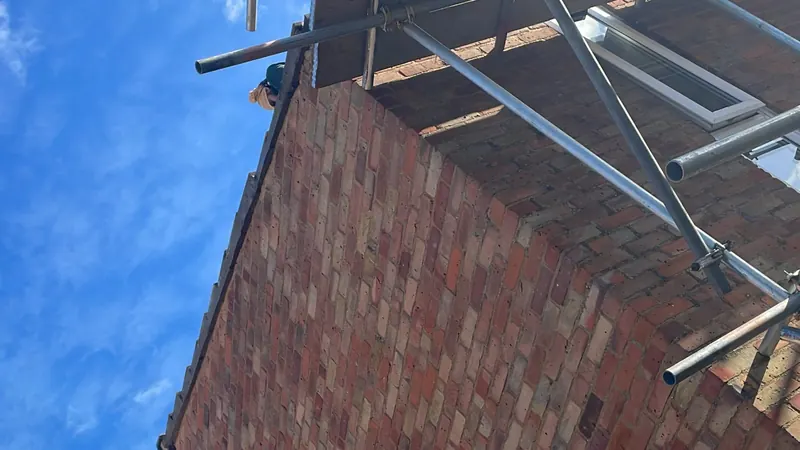
Roof height, wind and the condition of the covering govern safe access. We assess those conditions before putting anyone on the roof. A scaffold or tower gives us a stable position for damaged edges and ridges. We confirm the practical next step after checking the property and conditions.
Repairing storm damage beyond the first gap
A tile blown out of place leaves neighbouring pieces exposed. We check their fixings and look for cracks at the edges before closing the roof. Along a ridge, failed mortar loosens several tiles in the same run. We check that run so the repair secures more than the visibly displaced piece.
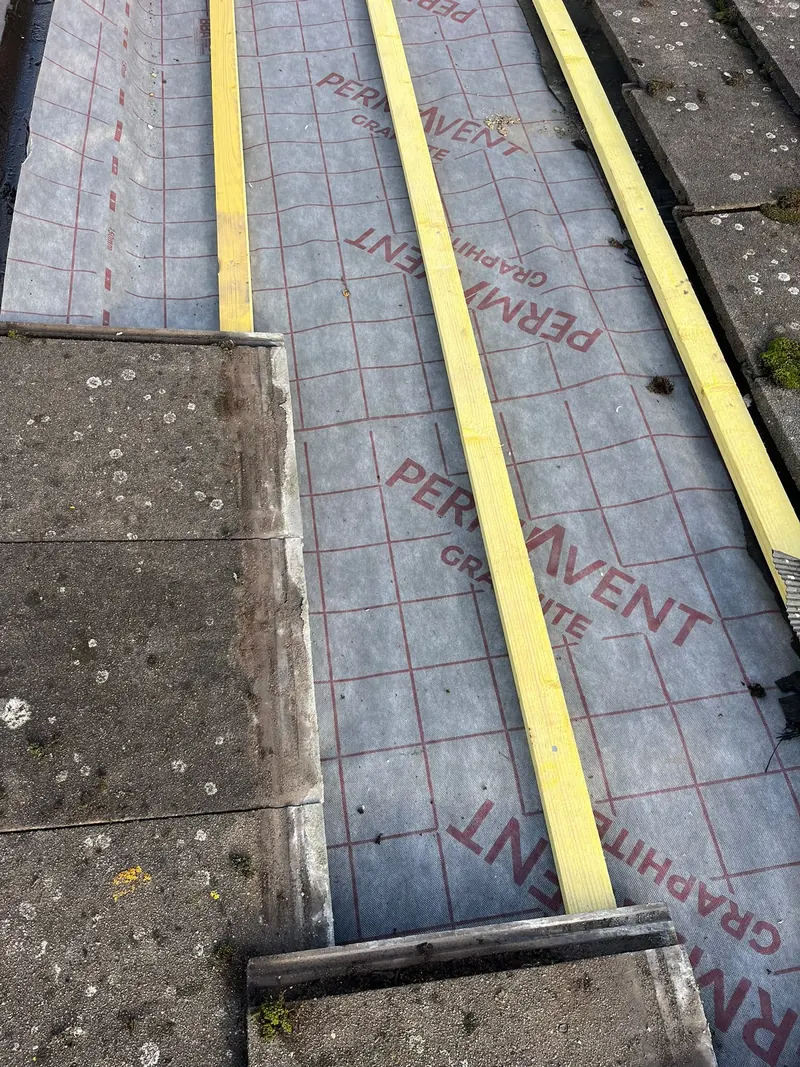
Our Basildon SS15 roof repair renewed five metres of failed felt and battens in one day. Breathable membrane and treated battens went in before the same tiles were relaid and the ridges repointed. That is the repair method behind the photo: we renew the failed layers and put sound covering back.