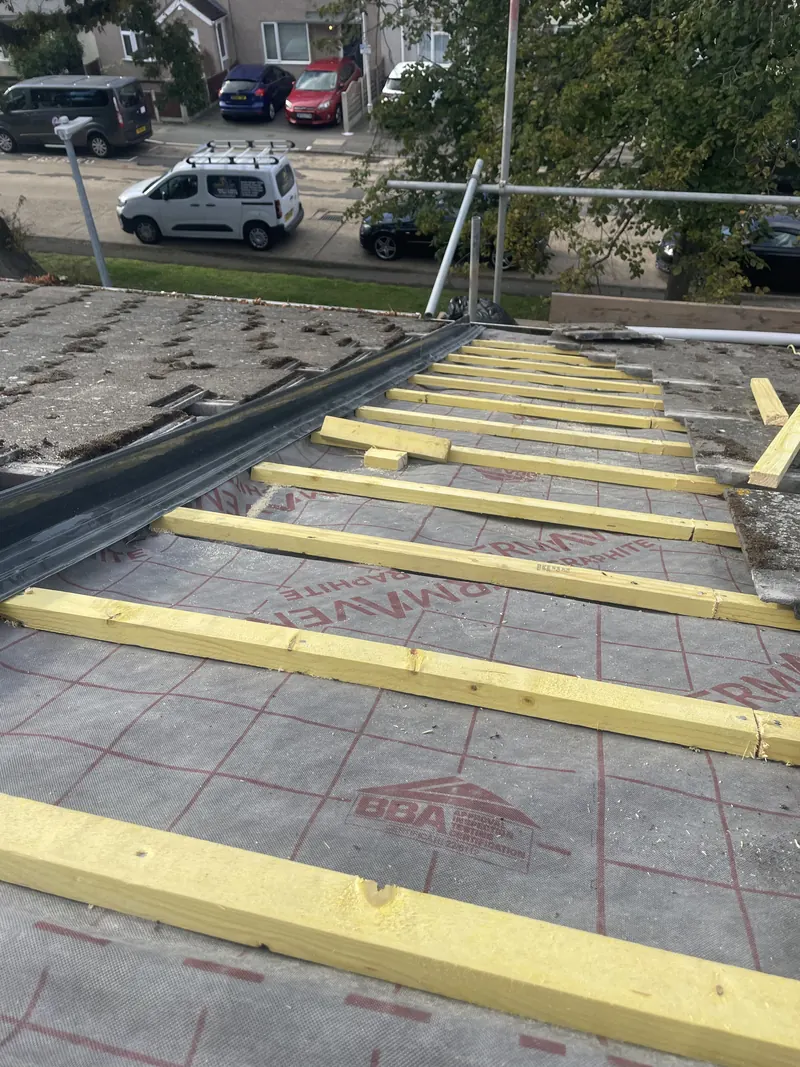
The work hidden under the covering
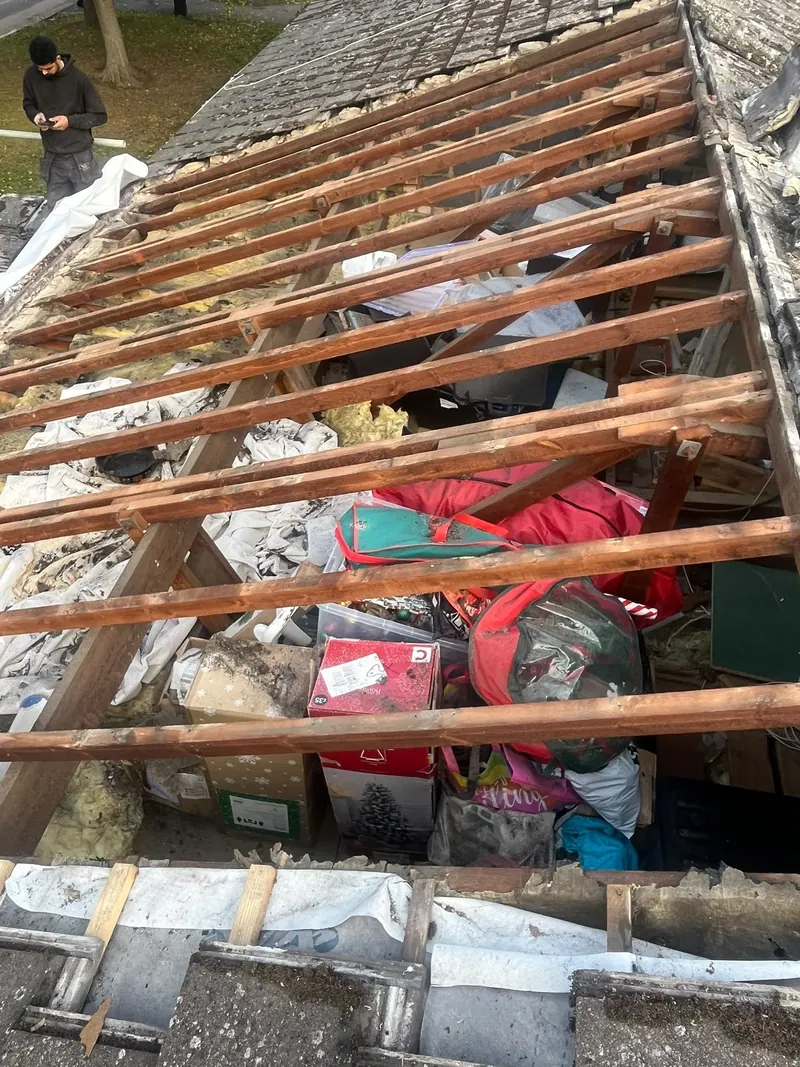
With the old felt and battens removed, we see the rafters and the edges of the roof properly. We check the timber before covering it again. Any damaged areas go into the repair scope, so the new membrane and battens sit on a sound base.
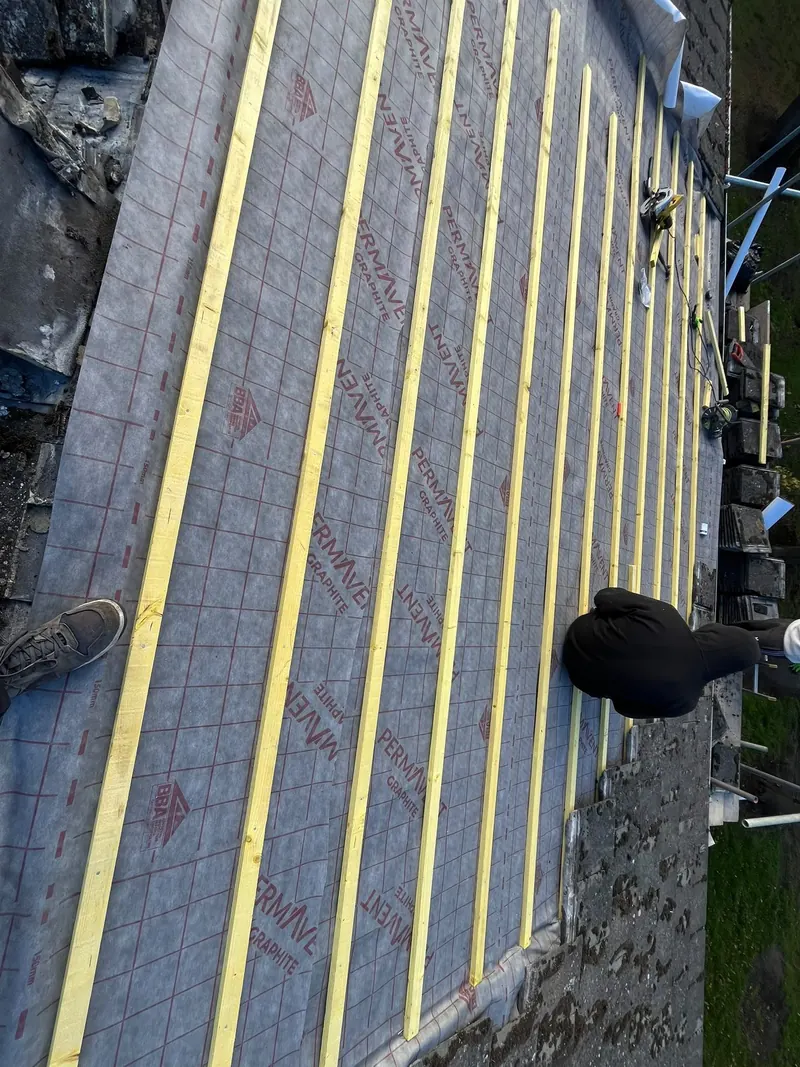
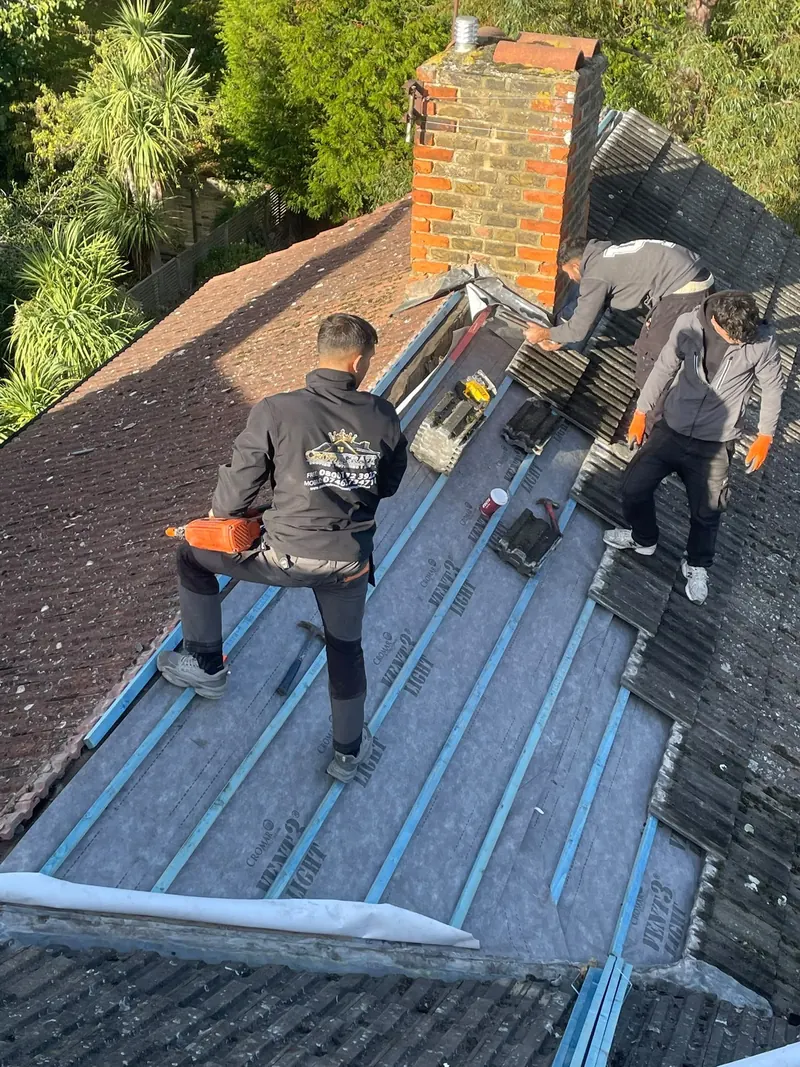
The membrane runs down towards the eaves, with each course overlapping the one below. We set out the battens to suit the tile or slate size and roof pitch. That spacing gives your covering its correct overlap, keeps the courses straight and supports the fixings across the slope.
Keeping tiles that still do their job
A re-roof does not mean throwing away every tile. We separate sound pieces from cracked tiles and those with broken nibs or fixing holes. Reusing a sound covering keeps the roof's familiar appearance while we replace the worn layers that have been letting water reach your loft.
At Basildon SS14, failed felt was letting water in and the roof timbers were weak. We stripped back to the rafters, fitted breathable membrane and treated battens, then relaid the same tiles. That full re-roof took three days. The covering stayed, but the layers supporting it were renewed.
Finishing the ridge and roof edges
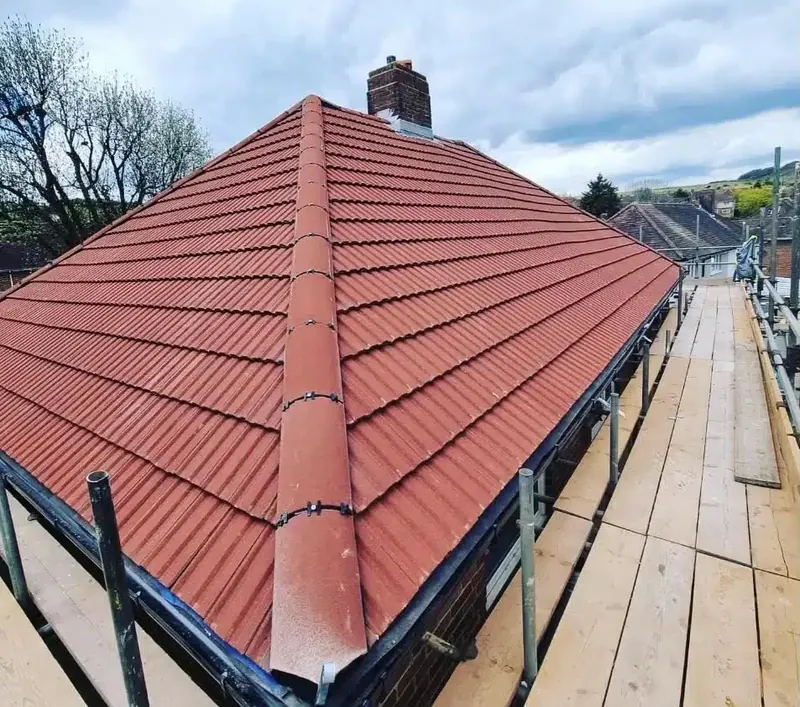
The top and edges need the same care as the slopes. We check the verge, hips, valleys and lead flashings as part of the roof. Dry ridge secures the ridge tiles mechanically over a ventilated roll. At the eaves, we check that water drains into the gutter.
Our Gillingham ME7 re-roof finished with a new dry ridge system over the customer's own tiles. That job also took three days. Your roof's size, shape, covering and access set its programme and quote. A hipped roof or several chimney junctions adds detail that a simple open slope does not have.