The four sides of a chimney
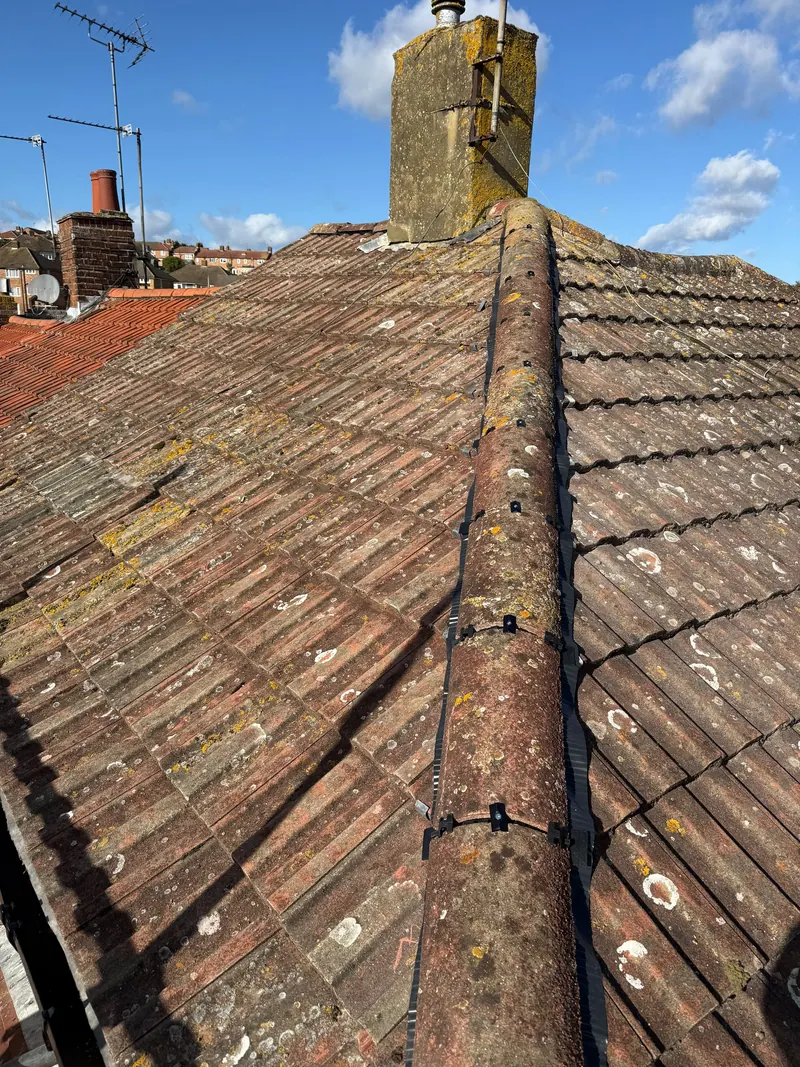
The apron runs across the downhill face of the chimney and over the tiles. Side flashings protect the stepped junctions along the stack. Behind it, a back gutter takes water around the uphill obstruction. We check how these pieces overlap, so rain passes from one to the next without entering the roof.
Debris behind a chimney holds water against the lead and hides splits. We clear that channel and inspect the metal underneath. If the lead has torn, we renew the failed section and check its connection to the sides. Fresh pointing above the flashing closes gaps where water runs behind it.
Stepped flashings and wall abutments
Along a pitched roof against a wall, stepped lead follows the brickwork joints. The top edge sits in the masonry, while the lower edge covers the roof junction. We refix loose sections and renew damaged pieces, keeping the overlaps facing downhill so water drains onto the covering.
Cement fillets crack where a roof and wall move against each other. Sealant over the crack leaves the rigid joint underneath. We check whether the junction needs a properly formed flashing instead. That gives your roof a weathering detail shaped around the tiles and secured into the wall above them.
Valleys and room for the lead to move
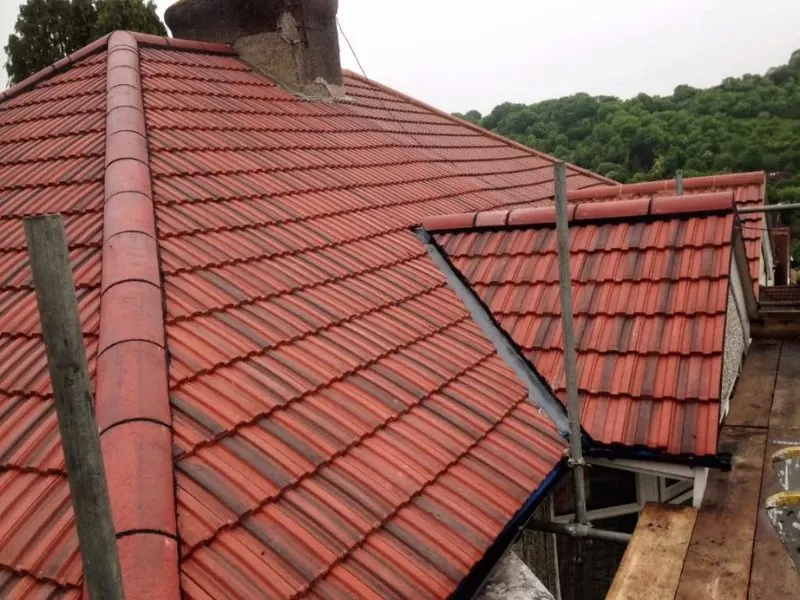
A valley collects rain from two roof slopes, so its channel has more water to carry than an open tile course. We check the lining, laps and support beneath it. Cut tiles must leave the drainage route clear. We lift them around damaged lead and restore the channel before relaying the edges.
We choose the lead thickness and section lengths to suit the detail, with fixings that allow movement. The length of the junction, roof height and surrounding tile or brick repairs affect the work. Your free quote sets out those parts together, so the repair closes the whole failed junction.